Lightning is both fascinating and dangerous. When you see that bright flash, do you ever wonder just how far away it really is?
Knowing the distance between you and a lightning strike isn’t just interesting—it could be life-saving. You’ll learn a simple, reliable way to measure how far lightning is from your location using nothing but your eyes and ears. By mastering this easy technique, you’ll gain a better understanding of approaching storms and be able to make smarter decisions about your safety.
Keep reading to find out how to quickly calculate lightning distance with step-by-step instructions you can use anytime, anywhere.

Credit: www.wikihow.com
Flash To Bang Method
The Flash to Bang Method is a simple way to measure how far lightning is from you. It uses the time difference between seeing lightning and hearing thunder. This method needs no tools, just your eyes and ears. It helps you stay safe by knowing when a storm is near.
Counting Seconds Between Lightning And Thunder
First, watch for a flash of lightning. Once you see the flash, start counting seconds out loud. Keep counting until you hear the sound of thunder. The number you count is the key to finding the distance. Try to count as accurately as you can.
Dividing By Five For Distance
Take the number of seconds you counted between the flash and the bang. Divide that number by five. The result tells you how many miles away the lightning struck. For example, if you count 10 seconds, the lightning is about 2 miles away. This quick math gives you a safe estimate.
Why This Method Works
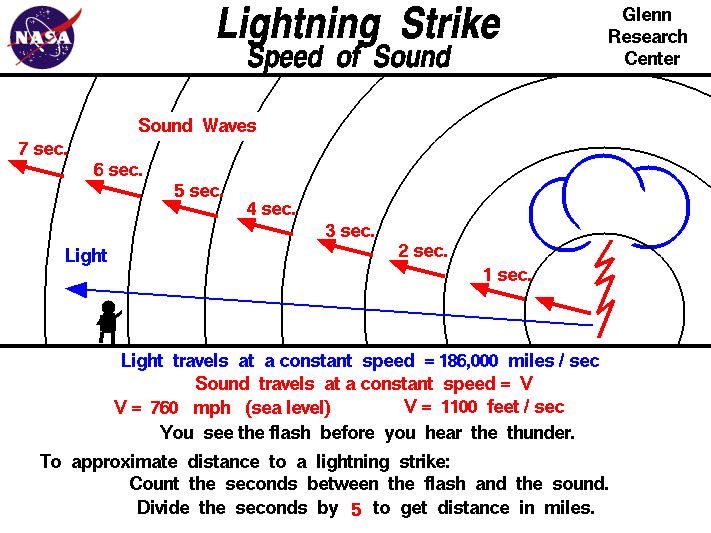
Light travels much faster than sound. Lightning’s flash reaches your eyes almost instantly. Thunder takes longer to travel through the air to your ears. Sound moves about one mile every five seconds. This difference in speed makes the Flash to Bang Method reliable and easy to use.
Sound And Light Speeds
Understanding the difference between sound and light speeds is crucial to measure lightning distance. Lightning produces both light and sound. Light reaches us instantly, while sound travels slower. This time difference helps calculate how far the lightning strike occurred.
Speed Of Light Vs Speed Of Sound
Light moves incredibly fast, about 186,000 miles per second. It reaches our eyes almost immediately after lightning strikes. Sound travels much slower, roughly 1,125 feet per second in air. This slower speed means thunder takes time to arrive after the flash.
The contrast between these speeds creates a delay. We see lightning first and hear thunder later. This delay varies with distance and helps estimate how far the lightning is from us.
How Sound Delay Helps Measure Distance
Start counting seconds as soon as you see lightning. Stop counting when you hear the thunder. The number of seconds counted shows how far the storm is.
Dividing the seconds by five gives the distance in miles. For example, if you count 10 seconds, the lightning is about 2 miles away. This simple method uses the sound delay to measure lightning distance safely and quickly.
Safety Tips During Storms
Storms with lightning pose serious risks. Staying safe during these events is crucial. Knowing how to measure lightning distance helps, but safety rules matter most. Follow these tips to protect yourself.
Why Staying Indoors Matters
Lightning often strikes tall objects outdoors. Being inside reduces the chance of getting hit. Buildings shield you from direct strikes and flying debris. Avoid open areas like fields or hills during storms.
Cars also offer good protection. The metal frame directs electricity away from passengers. Stay inside your vehicle if caught outside during lightning.
Avoiding Plumbing And Metal Objects
Lightning can travel through pipes and metal surfaces. Avoid using sinks, baths, or showers during storms. Do not touch metal doors, windows, or appliances.
Electrical currents can move quickly through metal wiring. Stay away from corded phones and plugged-in electronics. Use battery-powered devices instead.
Recognizing Dangerous Distances
Counting seconds between lightning and thunder helps estimate distance. Divide the number of seconds by five to get miles. If lightning is within 10 miles, take shelter immediately.
Closer strikes mean greater danger. Move indoors as soon as you hear thunder. Never ignore the sound, even if lightning seems far away.
Credit: www.grc.nasa.gov
Tools And Apps For Lightning Distance
Measuring the distance of lightning can be done easily with the right tools. Various apps and devices help track lightning strikes in real-time. These tools make it safer and simpler to know how close a storm is. Understanding the options available helps you choose what fits your needs best.
Using Weather Apps
Many weather apps show lightning activity on maps. These apps use data from weather stations and satellites. They display the location and distance of lightning strikes. You can see alerts for nearby storms on your phone. Some popular apps include weather radar and storm trackers. These apps are free or low-cost and easy to use.
Weather apps update frequently, giving near real-time information. You can watch storms approach and decide when to seek shelter. They work well for daily use and outdoor activities. Many apps also provide safety tips during thunderstorms.
Specialized Lightning Detection Devices
Special devices detect lightning by sensing electrical signals in the air. These devices are designed for outdoor use and can be very accurate. They measure the time between lightning and thunder to calculate distance. Some models display distance in miles or kilometers. Others give audio or visual alerts when lightning is near.
These devices are useful for campers, hikers, and outdoor workers. They work even without internet or phone service. Many are portable and easy to carry on trips. Investing in one can increase your safety during storms.
Common Mistakes To Avoid
Measuring the distance of lightning is important for safety. Mistakes can cause wrong estimates and increase risk. Knowing common errors helps you avoid danger. Here are key mistakes to watch out for.
Miscounting Seconds
Counting seconds between lightning flash and thunder is simple. Start counting right after the flash. Stop when you hear the thunder. Many people stop too early or too late. This leads to wrong distance calculation. Use steady counting at a normal pace. Practice helps improve accuracy.
Ignoring Thunder Sounds
Sometimes, thunder is faint or distant. Ignoring soft thunder can cause underestimation of risk. Thunder is the sound lightning makes. If you hear it, lightning is nearby enough to be dangerous. Don’t rely only on seeing lightning. Always listen carefully for thunder after a flash.
Underestimating Lightning Risk
Lightning can strike far away from rain clouds. Thinking lightning is safe because it seems distant is risky. Lightning can travel several miles. Being outdoors during a storm is dangerous no matter the distance. Always seek shelter quickly. Do not wait until lightning seems very close.
Lightning Distance And Storm Awareness
Understanding lightning distance helps you stay safe during storms. Knowing how far lightning strikes are can prevent accidents and injuries. Storm awareness begins with recognizing the signs and measuring distance quickly. This knowledge guides you on when to act and where to find shelter.
What Distance Means For Safety
Lightning can strike miles away from a storm. It does not need rain to be dangerous. The farther the lightning, the safer you usually are. But lightning within 10 miles is risky. It can reach you even if the sky seems clear. Always respect lightning distance to avoid harm.
Measuring the distance helps decide if it is safe to stay outside. If lightning is close, it means danger is near. It is important to watch for thunder after you see a flash. Thunder sound means lightning is close enough to be dangerous.
When To Take Shelter
Take shelter immediately when lightning is within 10 miles. Count the seconds from flash to thunder. Divide the seconds by five to find miles. If the number is 10 or less, find shelter fast. Safe places are inside a building or a car.
Do not wait until the storm feels very close. Lightning can strike before rain or strong winds start. Avoid open fields, tall trees, and water during a storm. Stay indoors until 30 minutes after the last thunder. This ensures the storm has moved away.
Credit: www.calctool.org
Frequently Asked Questions
How Far Away Is Lightning If Thunder Is 10 Seconds?
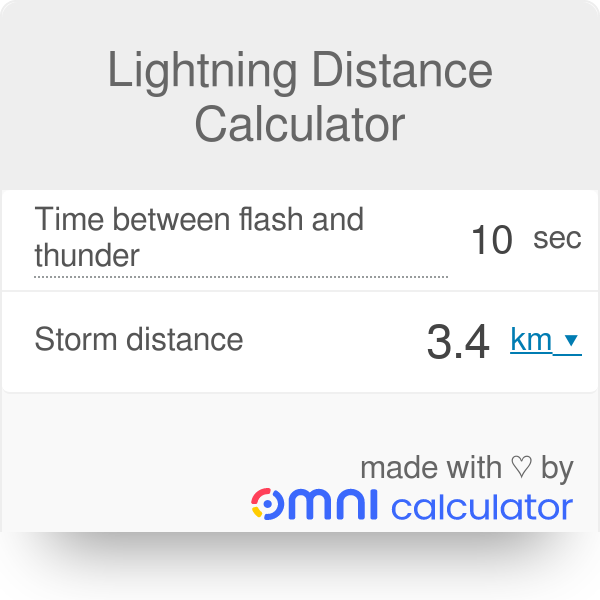
If thunder sounds 10 seconds after lightning, the lightning is about 2 miles away. Divide the seconds by 5 to calculate distance.
What Is The 30 30 30 Rule For Lightning?
The 30 30 30 rule warns to seek shelter if lightning appears within 30 seconds and to wait 30 minutes after the last thunder before leaving. Stay indoors for at least 30 minutes to ensure safety from lightning strikes.
How To Calculate The Distance Of Lightning?
To calculate lightning distance, count seconds between lightning flash and thunder sound. Divide the count by five to get miles.
Can I Shower If Lightning Is 2 Miles Away?
Showering with lightning 2 miles away still poses a risk. Lightning can travel through plumbing and strike you. Avoid showering during thunderstorms for safety.
Conclusion
Measuring lightning distance helps keep you safe during storms. Count the seconds between flash and thunder. Divide that number by five to get miles. This simple method works anywhere, anytime. Always stay indoors when you hear thunder. Lightning can strike even if the storm seems far.
Use this quick calculation to stay alert. Safety is the top priority in bad weather. Remember, watching and counting can protect your life. Stay calm, be prepared, and act wisely.