Have you ever wondered how to find out the energy of a moving object? Knowing how to measure kinetic energy can help you understand everything from sports to cars, and even everyday activities.
This simple concept reveals the power behind motion, and once you learn how to calculate it, you’ll see the world in a whole new way. Keep reading, and you’ll discover easy steps to measure kinetic energy yourself—no complicated math or science background needed.
Ready to unlock this exciting secret? Let’s dive in!
Basics Of Kinetic Energy
Kinetic energy is the energy that an object has because of its motion. Anything moving, from a rolling ball to a flying bird, carries kinetic energy. Understanding this energy helps us see how things move and how much power they have.
Measuring kinetic energy involves knowing a few simple ideas. It depends on two things: how heavy the object is and how fast it moves. These basics make it easy to calculate and understand kinetic energy.
What Is Kinetic Energy
Kinetic energy is the energy of motion. The faster something moves, the more kinetic energy it has. Heavier objects also hold more kinetic energy at the same speed. This energy can change into other forms, like heat or sound, when objects stop or collide.
Formula For Kinetic Energy
The formula to find kinetic energy is simple. It uses mass and speed to give a clear answer. The formula is:
Here, KE stands for kinetic energy. Mass is the weight of the object, and velocity is its speed. Squaring the velocity means speed has a big effect on kinetic energy. Doubling speed makes energy four times bigger.
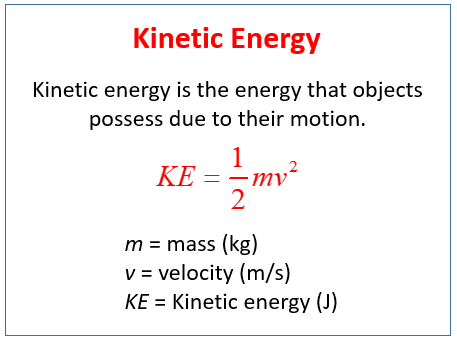
Credit: www.onlinemathlearning.com
Required Tools And Materials
To measure kinetic energy accurately, you need specific tools and materials. These help you find the key factors: mass and velocity. Both are essential for the kinetic energy formula.
Gather the right equipment before starting. This ensures precise and reliable results. Understanding what tools to use makes the process easier and more efficient.
Measuring Mass
A digital or mechanical scale works best for measuring mass. Choose one that shows weight in kilograms or grams. Place the object on the scale carefully to get an exact reading.
Make sure the scale is on a flat surface. Zero the scale before use. Accuracy in mass measurement directly affects kinetic energy calculations.
Measuring Velocity
Velocity measures how fast an object moves. Use a stopwatch and a measuring tape to find velocity. First, measure the distance the object travels.
Start the stopwatch as the object begins moving. Stop the timer once it reaches the end point. Divide the distance by time for velocity. Use meters per second as the unit.
Step-by-step Measurement Process
Measuring kinetic energy requires a clear and simple process. Each step helps to find the exact energy of a moving object. Follow these steps carefully to get accurate results.
Calculate Mass Accurately
Start by finding the object’s mass. Use a reliable scale to weigh it. Make sure the scale is set to the correct unit, usually kilograms. Record the mass carefully. Avoid any errors in reading the scale.
Determine Velocity Precisely
Next, find the object’s velocity. Velocity means speed with direction. Use a stopwatch and measure the time taken to cover a known distance. Divide the distance by time to get speed. Use meters per second (m/s) for best results.
Apply The Kinetic Energy Formula
Now, use the formula: KE = 0.5 × mass × velocity squared. Plug in the mass and velocity values. Multiply half of the mass by the velocity times itself. The answer gives the kinetic energy in joules. Double-check your calculation for accuracy.
Common Measurement Errors
Measuring kinetic energy requires careful attention to detail. Small errors can cause big mistakes in the final result. Understanding common measurement errors helps improve accuracy. This section covers two major sources of error: mass and velocity measurements.
Impact Of Inaccurate Mass
Mass is a key factor in kinetic energy calculation. Even slight errors in mass measurement affect the result. Using an uncalibrated scale can give wrong values. Guessing the mass or using approximate numbers reduces accuracy. Always use a precise and calibrated instrument to measure mass. This step ensures reliable kinetic energy calculations.
Velocity Measurement Mistakes
Velocity plays a large role in kinetic energy. Errors here can multiply because velocity is squared in the formula. Measuring velocity with poor timing or distance tools leads to mistakes. Estimating speed instead of measuring it directly adds error. Use accurate timing devices and measure distances carefully. Proper velocity measurement is critical for correct kinetic energy values.
Tips For Better Accuracy
Measuring kinetic energy requires care to get the best results. Accuracy matters for clear and useful data. Small mistakes can change your final answer. Follow some simple tips to improve your measurements and get closer to the true value.
Using Proper Instruments
Choose tools designed for measuring speed and mass accurately. Use a good stopwatch or motion sensor for time. A precise scale helps find mass without errors. Avoid old or damaged devices that give wrong readings. Check instruments before starting to ensure they work well.
Repeating Measurements
Take the same measurement several times. This lowers random errors and shows consistent results. Record each trial carefully and compare the numbers. If results vary, try to find the cause. Average your measurements to get a more reliable value.
Recording Data Correctly
Write down all data clearly and fully. Note units like kilograms and meters per second. Keep your notes organized to avoid confusion. Check your records twice to catch mistakes early. Good records make calculations easier and more accurate.

Credit: study.com
Practical Examples
Understanding kinetic energy becomes clearer through real-life examples. Practical examples help us see how kinetic energy works in daily activities and sports. These examples show how to measure and calculate kinetic energy easily.
Measuring Kinetic Energy In Sports
Sports provide a great way to study kinetic energy. A moving soccer ball has kinetic energy based on its speed and mass. To measure it, use the formula KE = 1/2 mv². M is the mass of the ball in kilograms. V is the speed of the ball in meters per second.
For example, if a soccer ball weighs 0.5 kg and moves at 10 m/s, its kinetic energy is 25 joules. This shows how energy changes with speed. Faster players or balls have more kinetic energy.
Kinetic Energy In Everyday Objects
Everyday objects also have kinetic energy when they move. A car driving at a steady speed has kinetic energy based on its weight and speed. To find this, measure the car’s mass and speed, then apply the kinetic energy formula.
Another example is a rolling bicycle. Its kinetic energy depends on its mass and how fast it moves. Even a walking person has small kinetic energy. This energy changes with how fast they walk or run.
Frequently Asked Questions
What Formula Is Used To Measure Kinetic Energy?
Kinetic energy is calculated using the formula KE = ½ mv². Here, m is mass in kilograms, and v is velocity in meters per second. This formula measures the energy an object has due to its motion.
How Do You Find Velocity To Calculate Kinetic Energy?
Velocity is the speed of an object in a specific direction. You can find it using distance divided by time or by measuring speed directly with instruments like radar guns.
Why Is Mass Important In Kinetic Energy Calculation?
Mass represents the amount of matter in an object. Kinetic energy depends directly on mass, meaning heavier objects have more kinetic energy at the same speed.
Can Kinetic Energy Be Negative?
No, kinetic energy cannot be negative. It is always zero or positive because it depends on the square of velocity, which is never negative.
Conclusion
Measuring kinetic energy helps us understand motion in everyday life. It shows how speed and mass affect energy. Using simple formulas makes calculations easy. You only need basic tools and clear steps. Knowing kinetic energy supports learning in science and physics.
Practice with real examples to get better. Keep these ideas in mind for future experiments. Energy is all around us, moving and changing constantly. This knowledge makes physics less confusing and more interesting.